
ROTO
I rotoscoped the human figure using a frame-by-frame rotoscoping technique to achieve precise and natural movement, carefully tracing each frame to maintain accurate motion and detail. For the fence, I used tracking tools to follow its consistent structure across frames, which allowed for faster and more efficient rotoscoping while ensuring alignment with the original footage. This combination of manual and automated methods helped maintain both accuracy and workflow efficiency.

Final Output
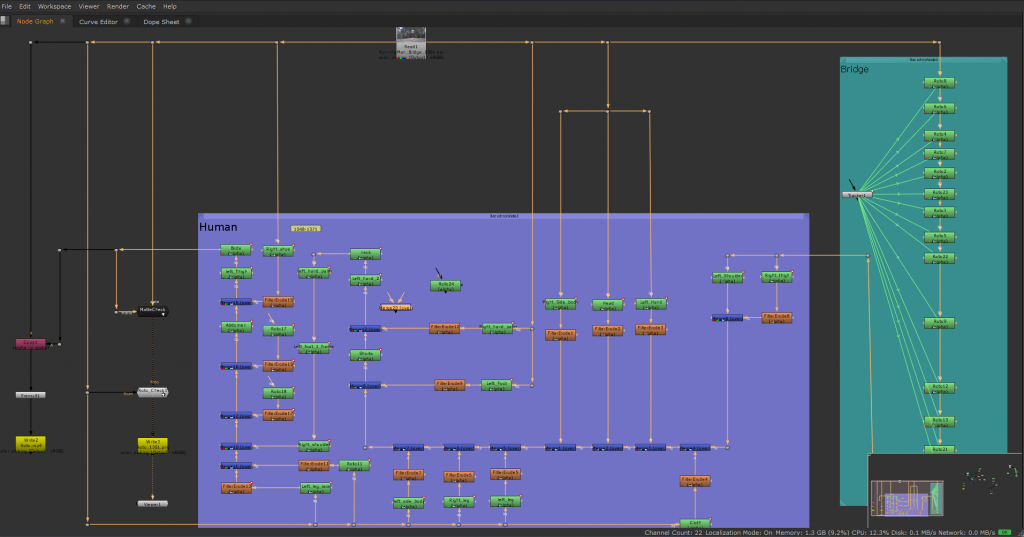
In addition, the Roto Alpha node was used to generate clean and accurate mattes from the rotoscoped shapes, ensuring proper separation of the subject from the background. Every shape was made using different roto node. The Merge node was then used to composite the rotoscoped elements seamlessly with other layers, maintaining visual continuity. The Filter Erode node played an important role in refining matte edges by shrinking, expanding, and smoothing them to remove unwanted artifacts and enhance realism. The Tracker node helped maintain consistent motion data for the fence, allowing it to stay perfectly aligned across all frames.
Together, these nodes formed an efficient and structured workflow that balanced manual precision with automated tools. By combining frame-by-frame rotoscoping for the human subject with tracking-based rotoscoping for static elements like the fence, the process achieved both high accuracy and time efficiency. This approach resulted in a clean, professional composite with smooth edges, stable motion, and a visually convincing final output.
Final Output
Leave a Reply