Nuke -Planar Track
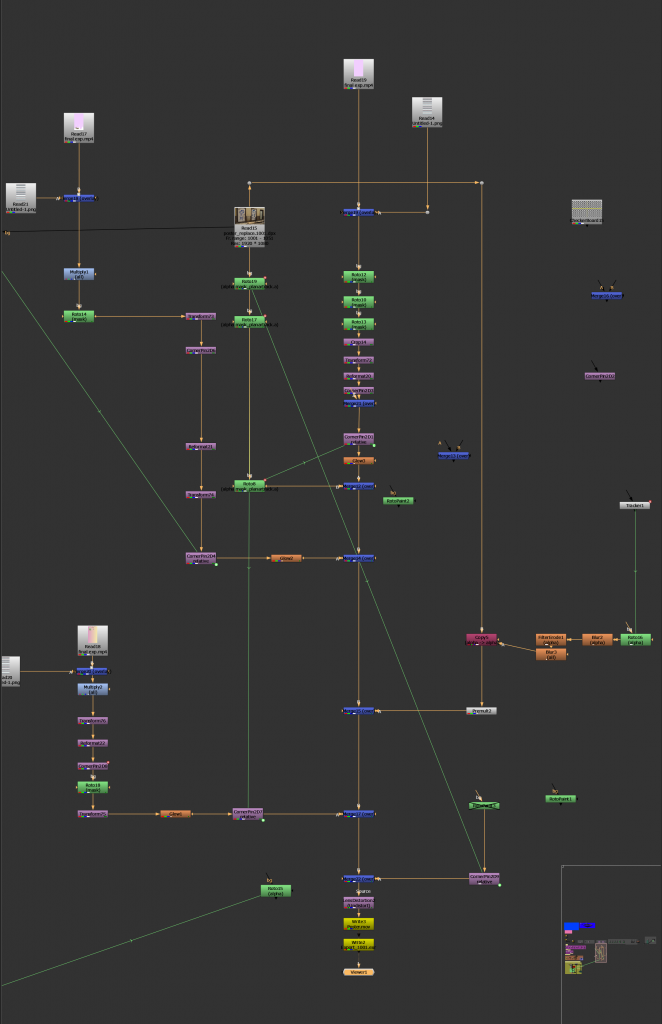
The Workflow!
This Nuke workflow is built around a planar-tracked shot, where the main plate is first stabilized using a planar track and then processed through a series of roto, transforms, and merges to integrate multiple elements seamlessly. The planar track drives corner pin and transform nodes, allowing inserted graphics and textures to lock naturally to the surface while maintaining perspective and parallax. Roto nodes are used to isolate specific areas for masking and cleanup, with glows and color operations added to enhance integration. Multiple merge chains composite the tracked elements back over the original plate, while premultiplication and alpha management ensure clean edges. Finally, subtle blurs and lens effects help match the original footage, resulting in a cohesive composite that follows the planar motion of the shot accurately.
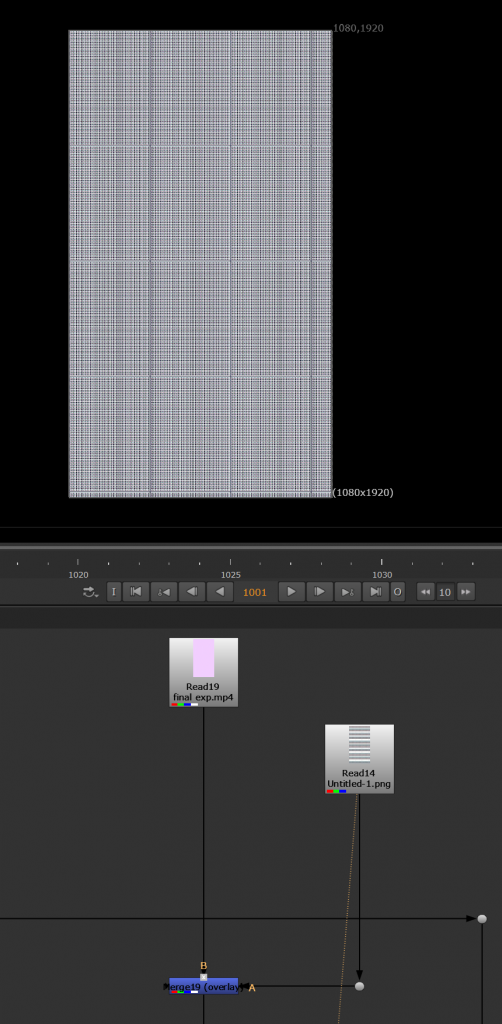
In this shot, an LED pixel grid PNG is composited over the original footage to create a believable screen effect. The plate is brought into Nuke and the LED texture is aligned to the screen area using transforms and corner pin data driven by the planar track, ensuring the pixel pattern sticks accurately to the surface throughout the motion. The grid is blended using overlay and merge operations, with opacity and color adjustments to match the brightness and contrast of the original screen. Subtle blurs, glows, and premultiplication are applied to soften the pixel edges and integrate the effect naturally into the footage, resulting in a realistic LED display that follows the camera movement and perspective of the shot.
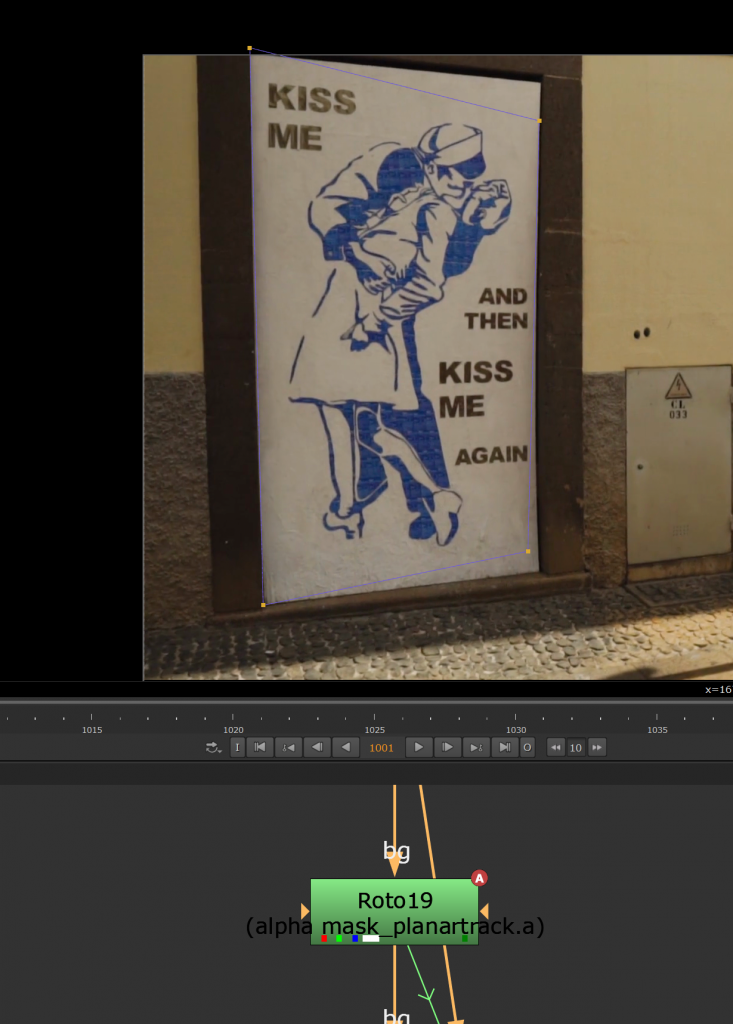
Roto – Planar Track
In this composite, a planar track is used to lock the artwork accurately onto the wall surface, with a roto shape defining the exact screen/poster area. The planar track provides stable corner pin data, ensuring the element follows the perspective, scale, and motion of the shot, while the roto refines the edges and masks out unwanted areas. This combination allows the inserted graphic to sit naturally within the frame, preserving surface distortion and camera movement. Final integration is achieved through careful blending, color matching, and subtle texture retention, making the composited element feel like it was originally part of the environment.
Leave a Reply