Nuke 2D Track
Uncover a realm of opportunities.
2D elements were composited into the live-action footage using precise 2D tracking techniques. The assets were animated to match the motion, scale, and perspective of the original camera movement, ensuring seamless integration with the scene. Additional adjustments were made to timing, positioning, and blending to maintain visual continuity and realism throughout the shot.
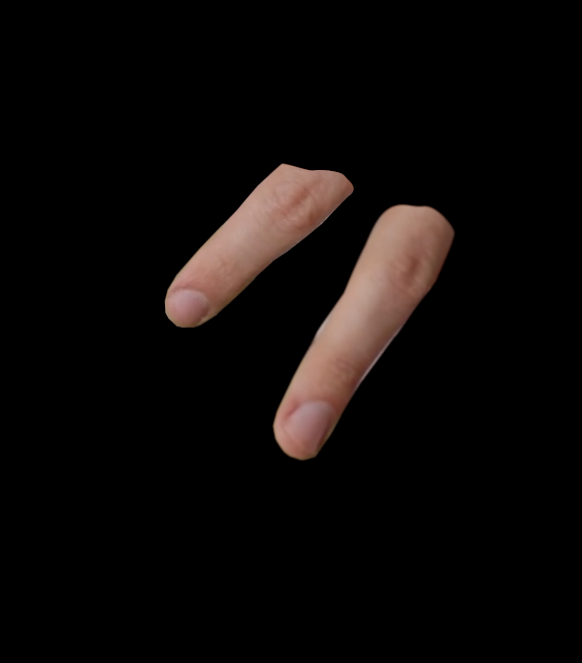
Rotoscope of fingers
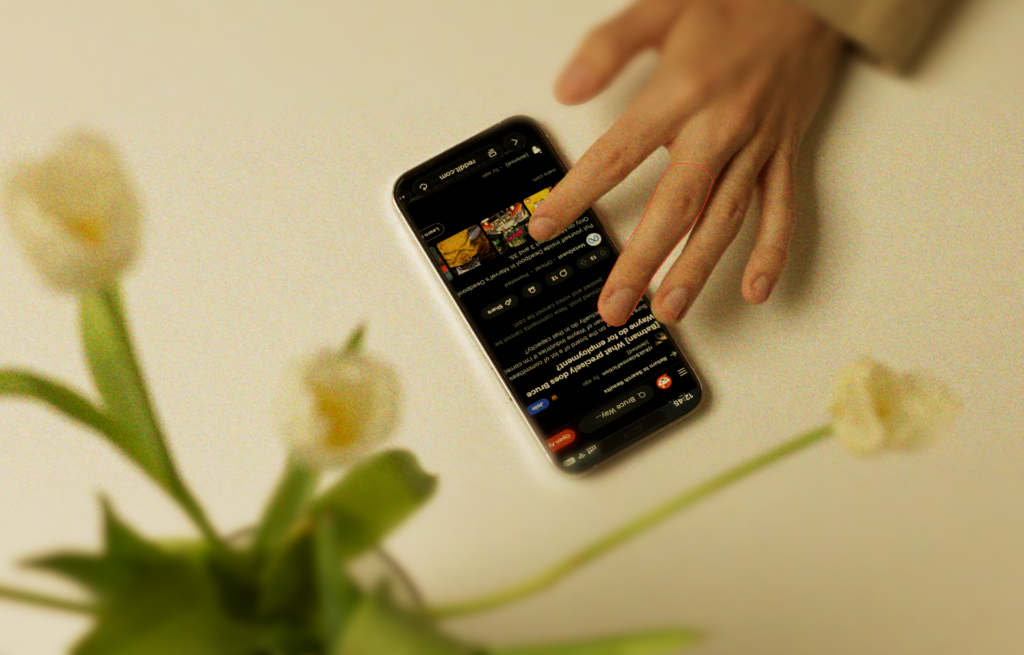
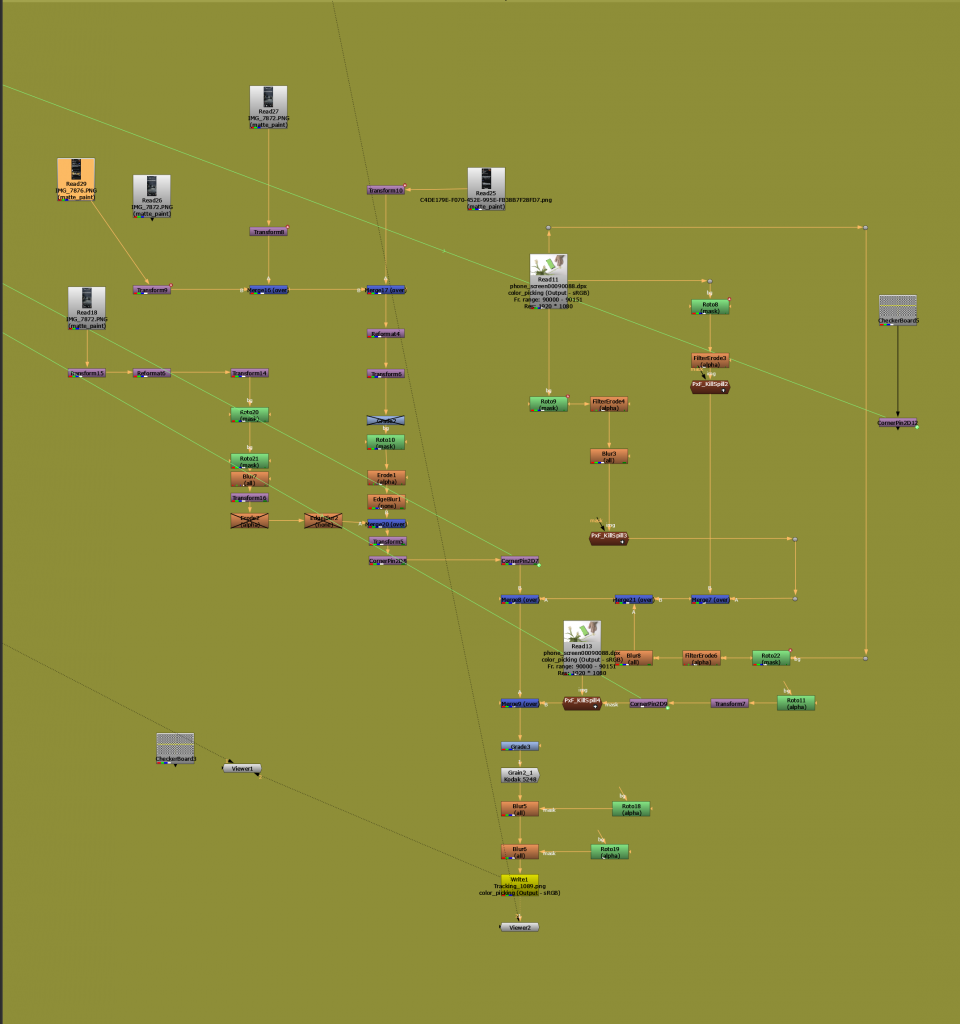
For the phone screen replacement, custom animation was integrated into the live-action footage. To ensure correct depth and interaction, the actor’s fingers were carefully rotoscoped using dedicated roto nodes, generating clean alpha mattes. These mattes were used to layer the animation beneath the fingers, allowing them to naturally occlude the screen content. The roto was refined frame-by-frame to preserve realistic edges, motion consistency, and contact accuracy, resulting in a seamless and believable screen interaction.
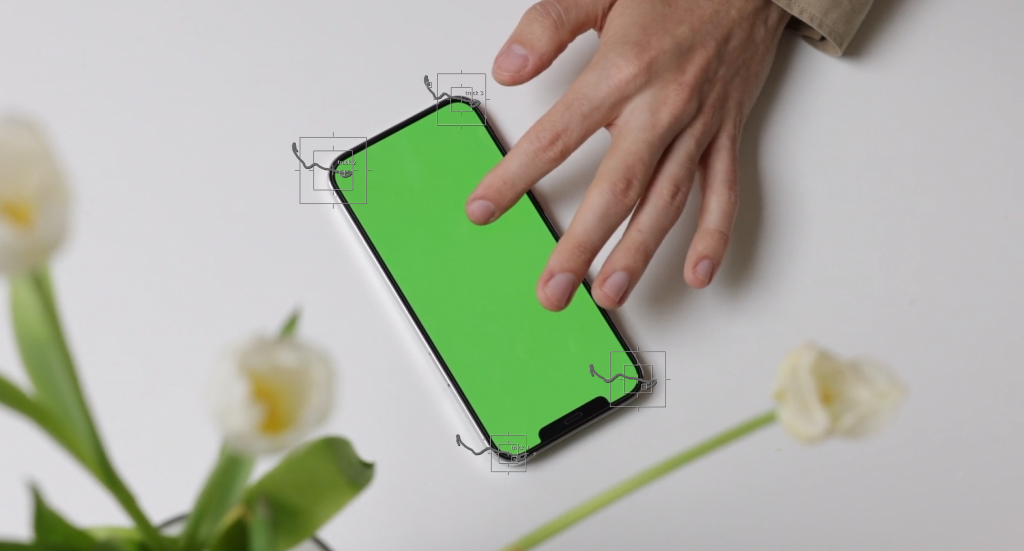
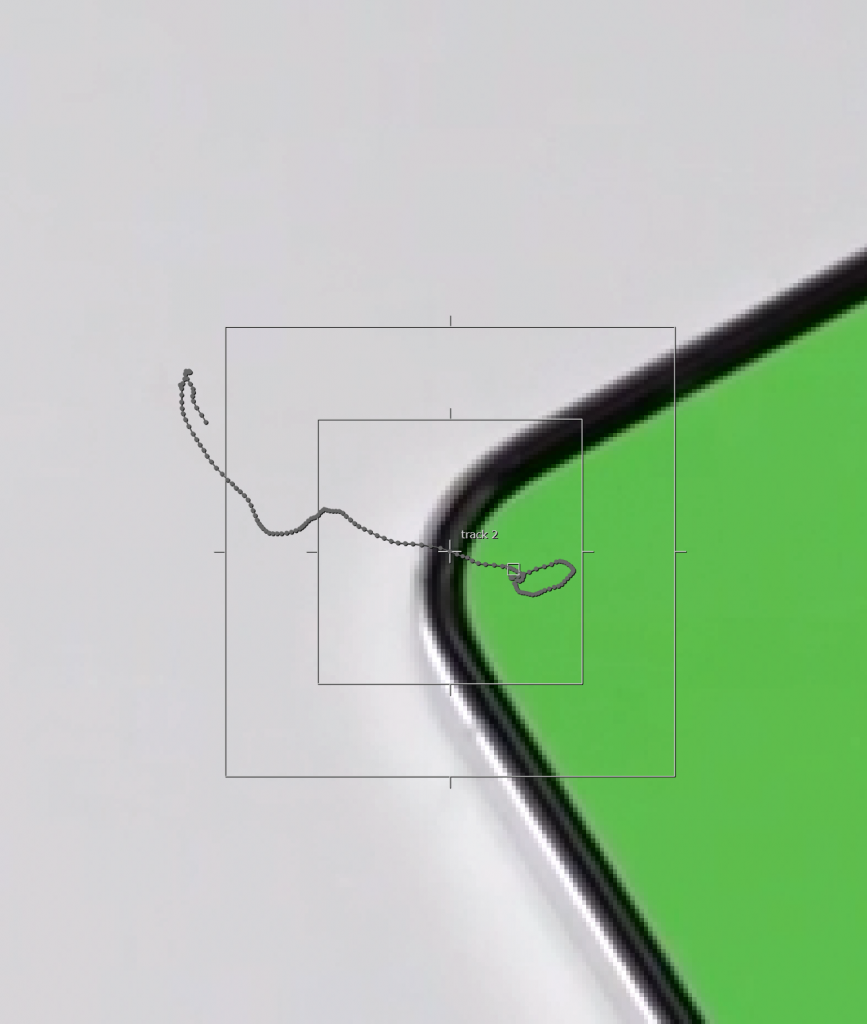
Tracking Corners
The phone screen was carefully tracked by analyzing and following the motion of its four corners across the duration of the shot. High-contrast features were used to ensure accurate and stable tracking results. The resulting tracking data was used to generate corner pins, preserving the screen’s position, scale, rotation, and perspective changes over time. Additional refinements were made to reduce drift and maintain consistency, ensuring the track remained locked to the screen and provided a solid, production-ready foundation for subsequent compositing steps.
The screen animation
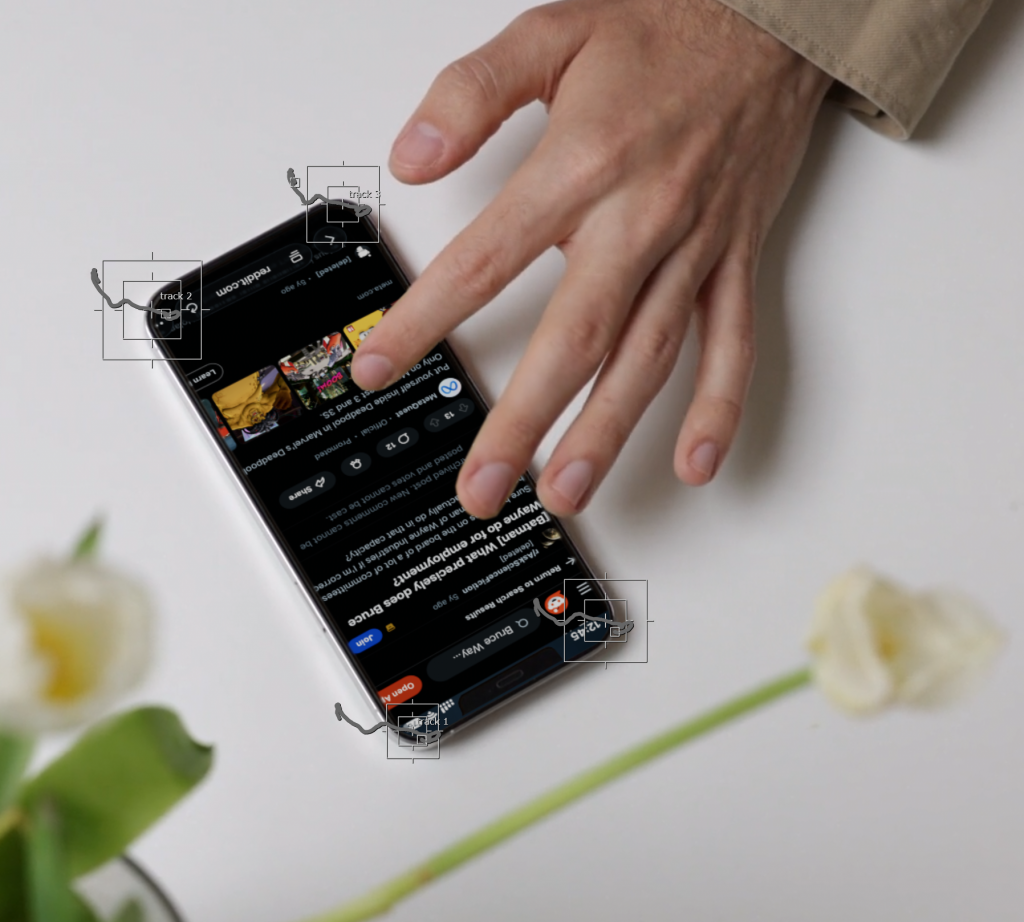
After tracking the four corners of the phone screen, the tracking data was used to generate corner pins that accurately matched the screen’s movement and perspective. The screen animation was then connected to the corner pin and composited onto the live-action footage. Careful alignment and refinement ensured the animation remained locked to the device throughout the shot. Final compositing adjustments were made to achieve seamless integration, maintaining visual consistency with the original footage.
Final Colour Grade
Following the screen integration, a final color grade was applied to balance the inserted animation with the live-action footage. Grain was then added to the composite to match the original plate’s texture and noise characteristics, ensuring the screen replacement blended naturally and maintained a cohesive, filmic look throughout the shot.
Workflow
Leave a Reply